Minxia Chen陈旻霞
Minxia Chen, finance job market candidate and PhD in Finance from INSEAD

Minxia Chen /MIN-shyah/

INSEAD, Finance Department

Finance job market candidate · 2026–27

minxia.chen@insead.edu

I work in household finance, studying how attention, memory, and information choice shape investment decisions. When does access to more information lead to better investments? This question runs through my research on retail trading, financial information, and AI. It draws on a research collaboration I initiated in 2023 and run independently with a large Chinese online trading platform, which records what investors look at, read, and trade.

My work follows three lines:

News

Research at a glance

attention information household finance behavioral finance retail investors digital platforms AI trading watchlists prices markets information acquisition AI chatbots disposition effect pushed news messages music royalty markets AI disclosure Islamic bonds (Sukuk) analyst forecasts news ownership returns memory clickstream trading platforms similarity recall ostrich effect reference dependence clientele effects yield spreads auctions stored attention emerging markets large language models investomers field data China streaming price limits disclosure regimes attention information household finance behavioral finance retail investors digital platforms AI trading watchlists prices markets information acquisition AI chatbots disposition effect pushed news messages music royalty markets AI disclosure Islamic bonds (Sukuk) analyst forecasts news ownership returns memory clickstream

Research

Attention, memory, and retail demand

The Watchlist Trap: Stored Attention and Recalled Rallies
solo-authored

Investor attention · Memory · Price limits · Watchlists

AFA Annual Meeting 2027, PhD Student Poster Session

Job market paper (PDF)

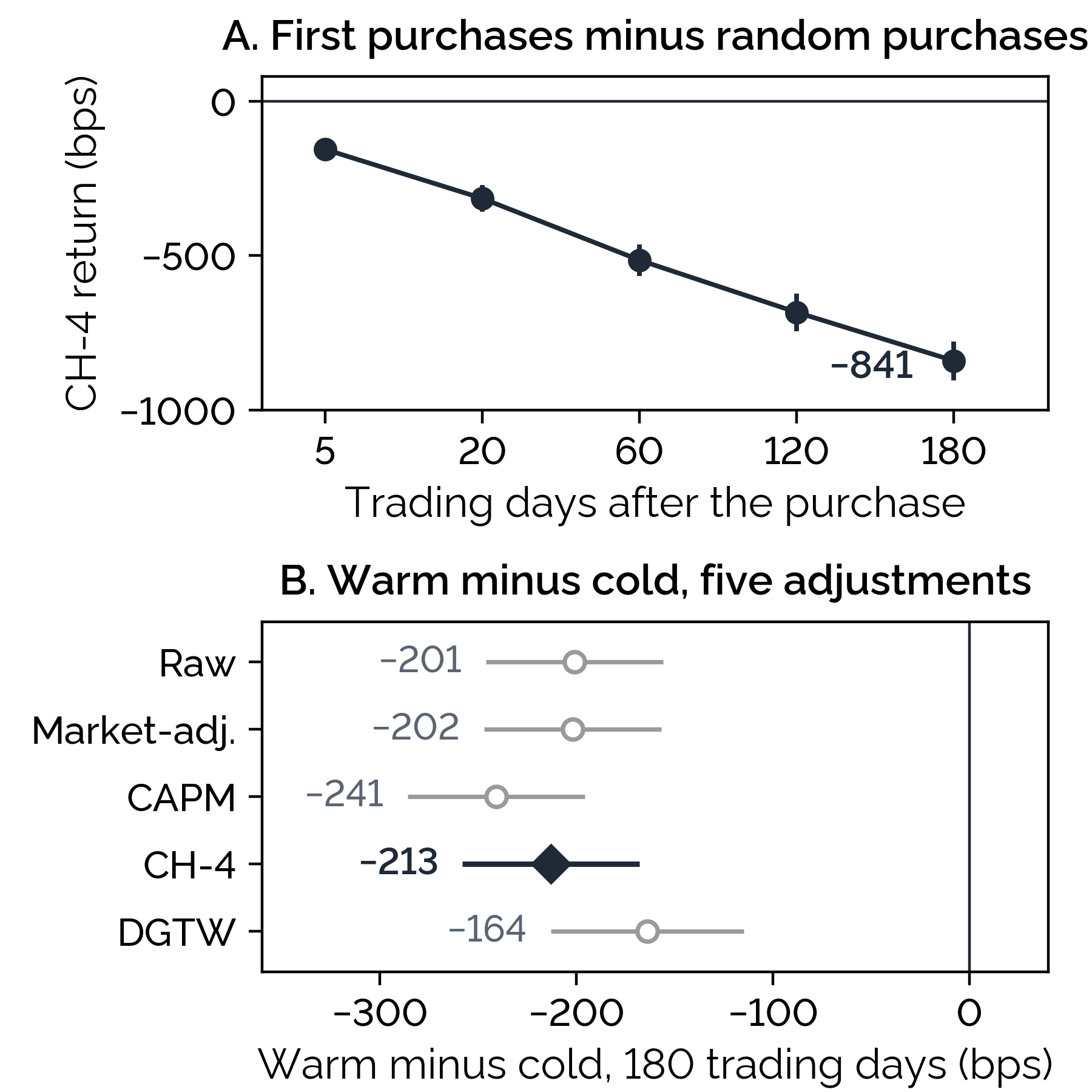
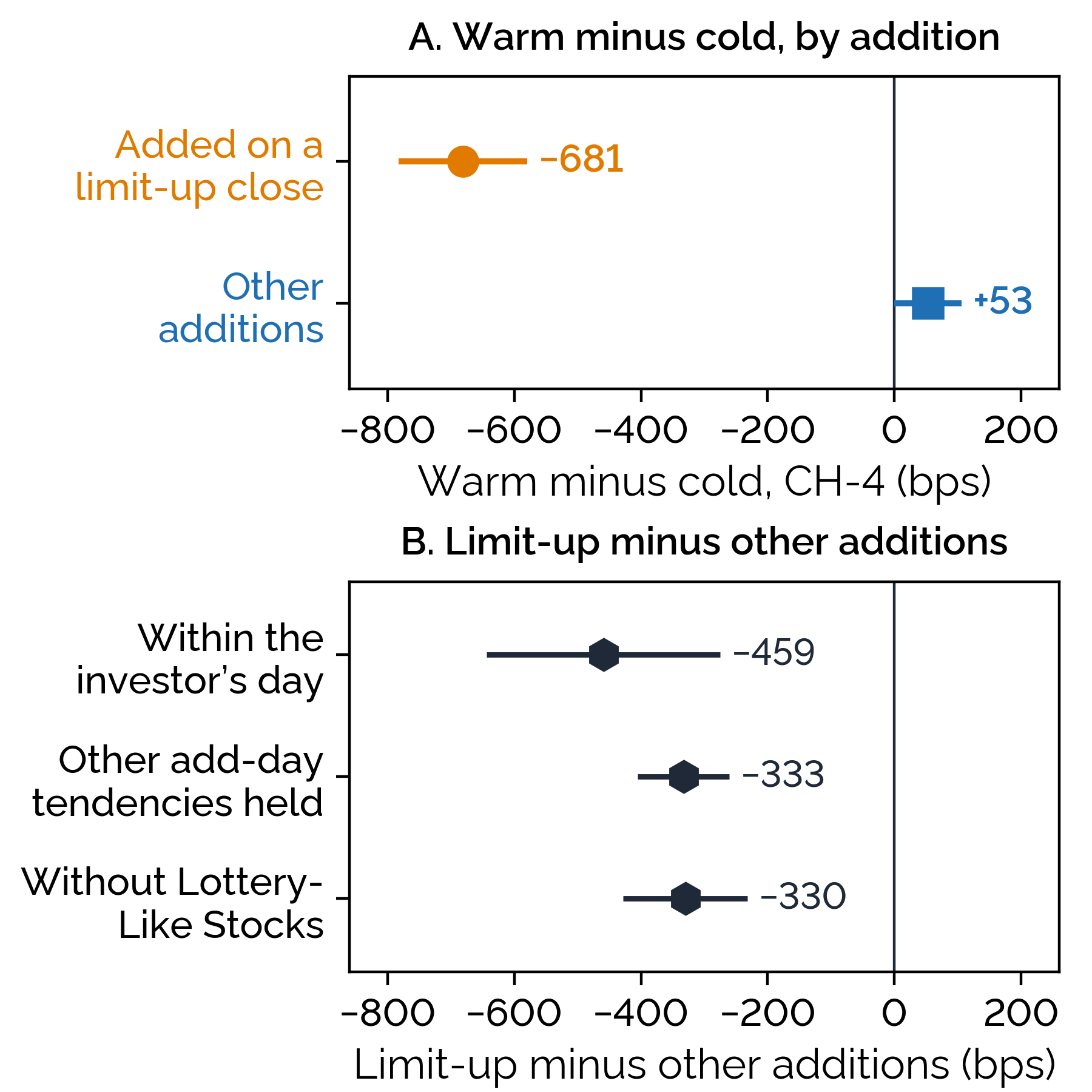
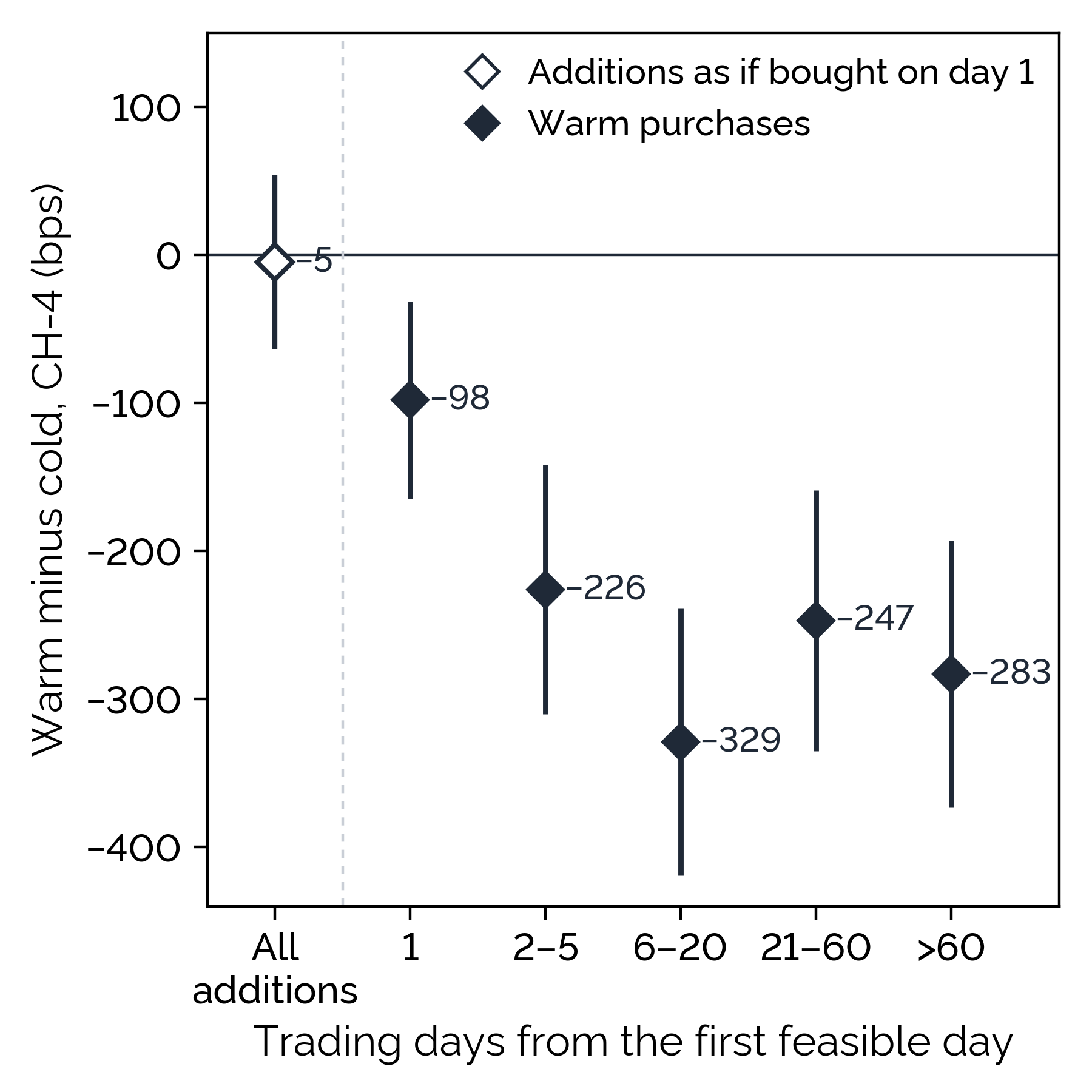
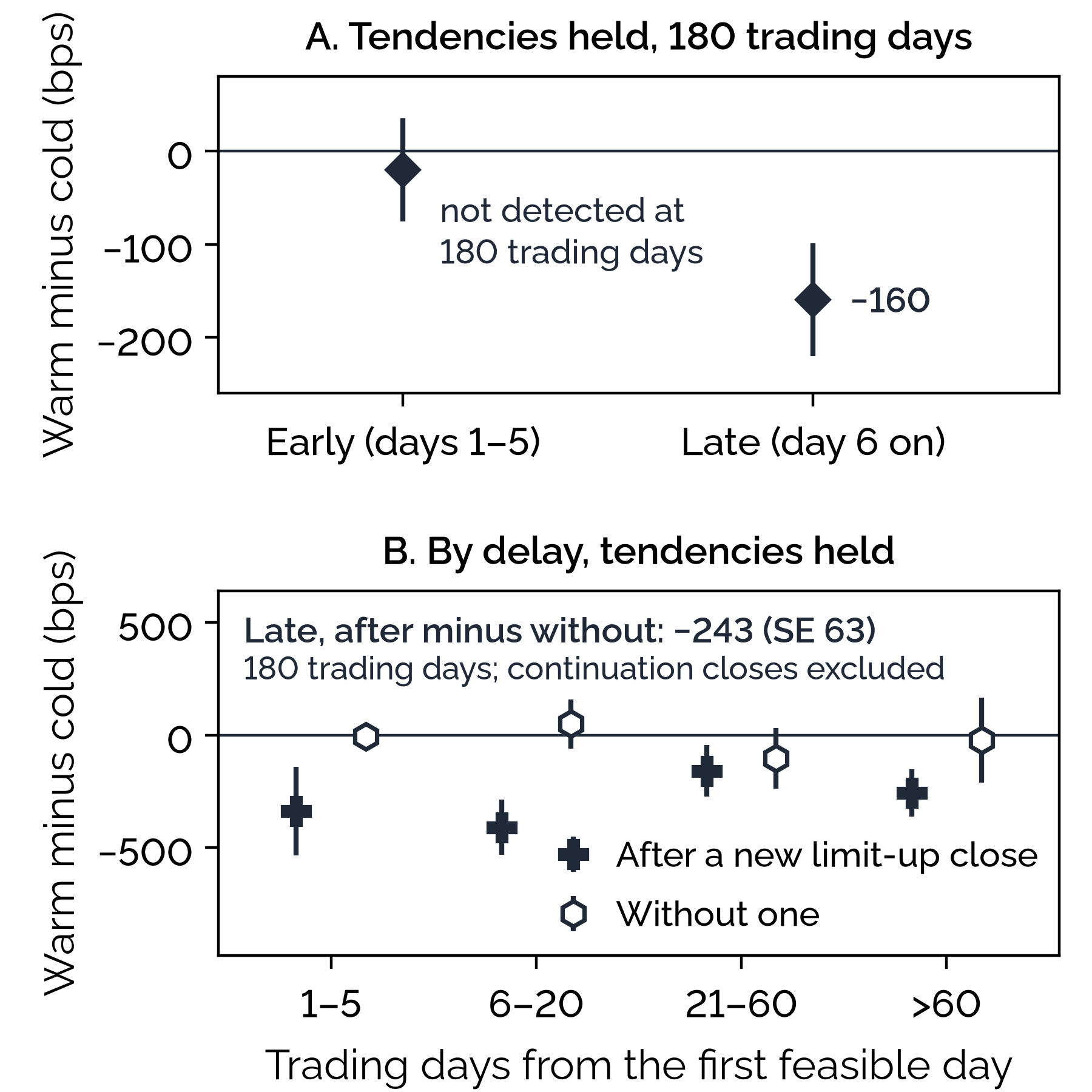
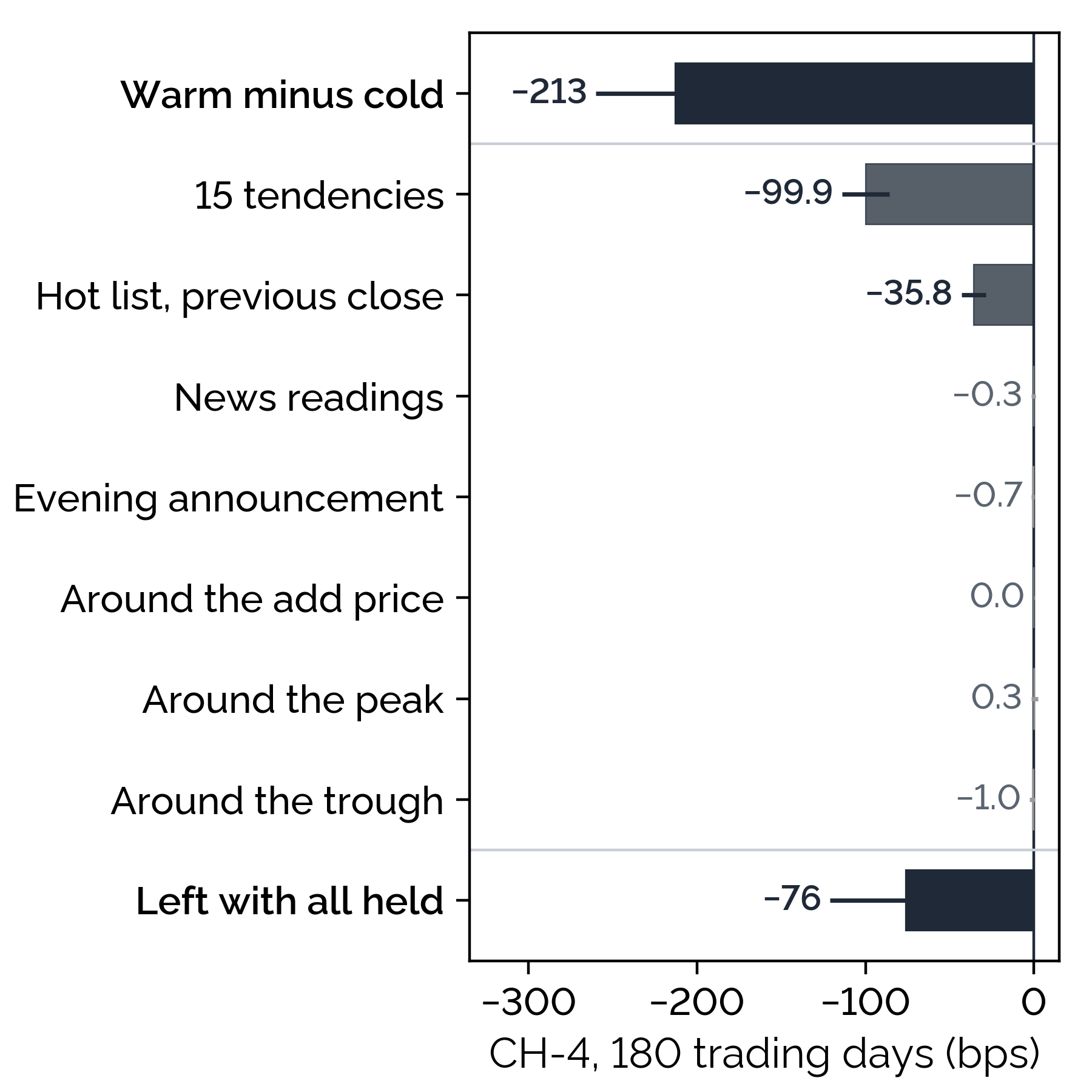
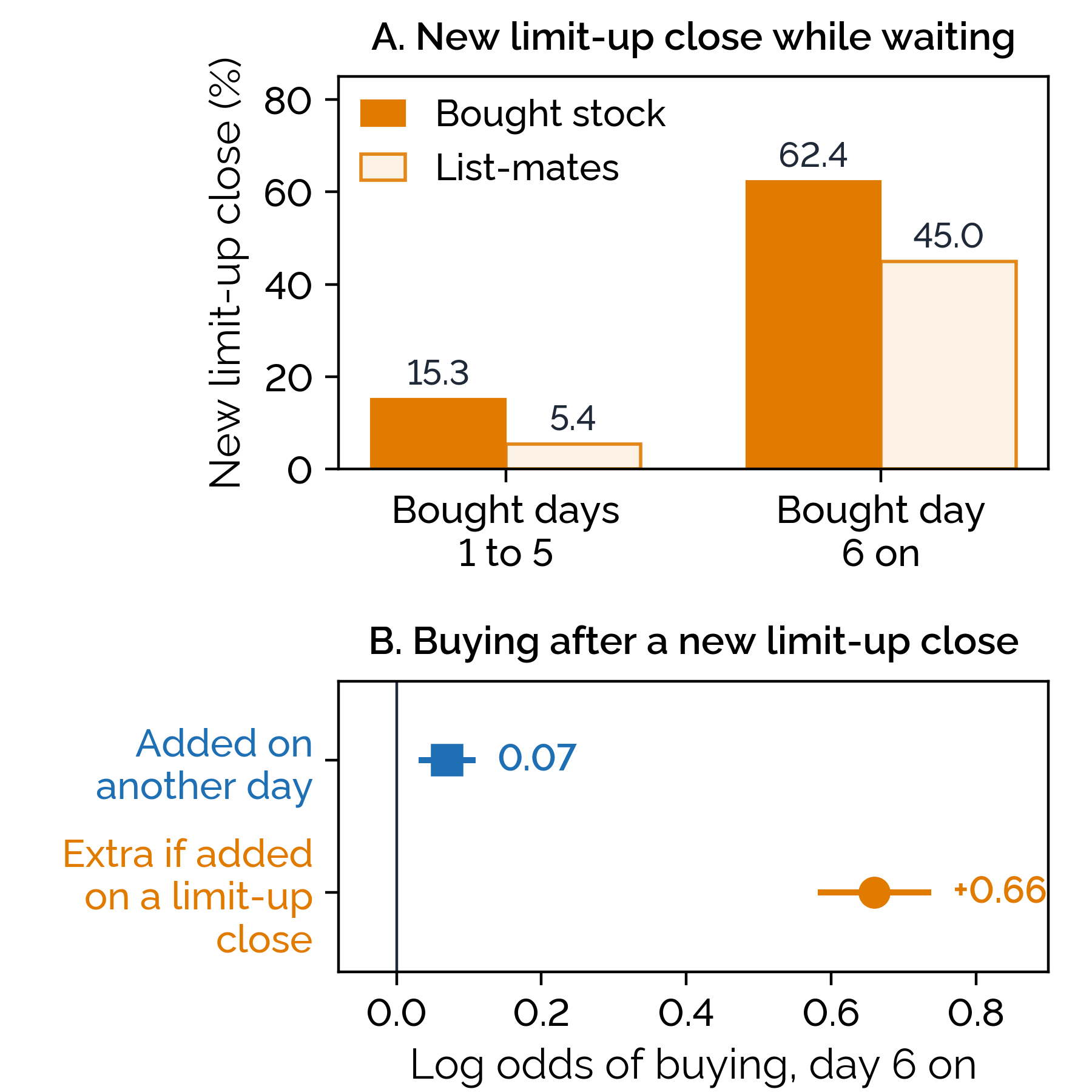
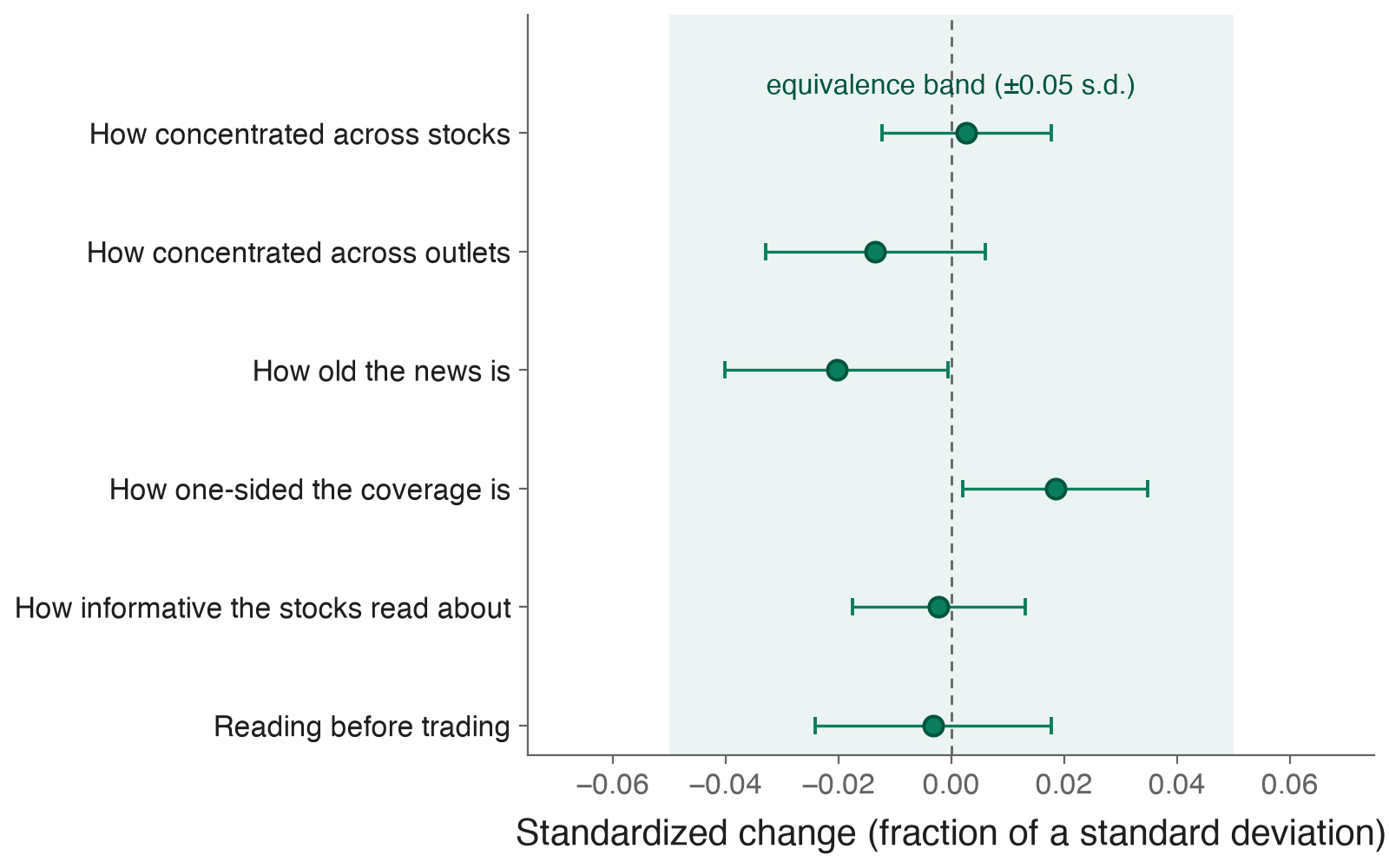
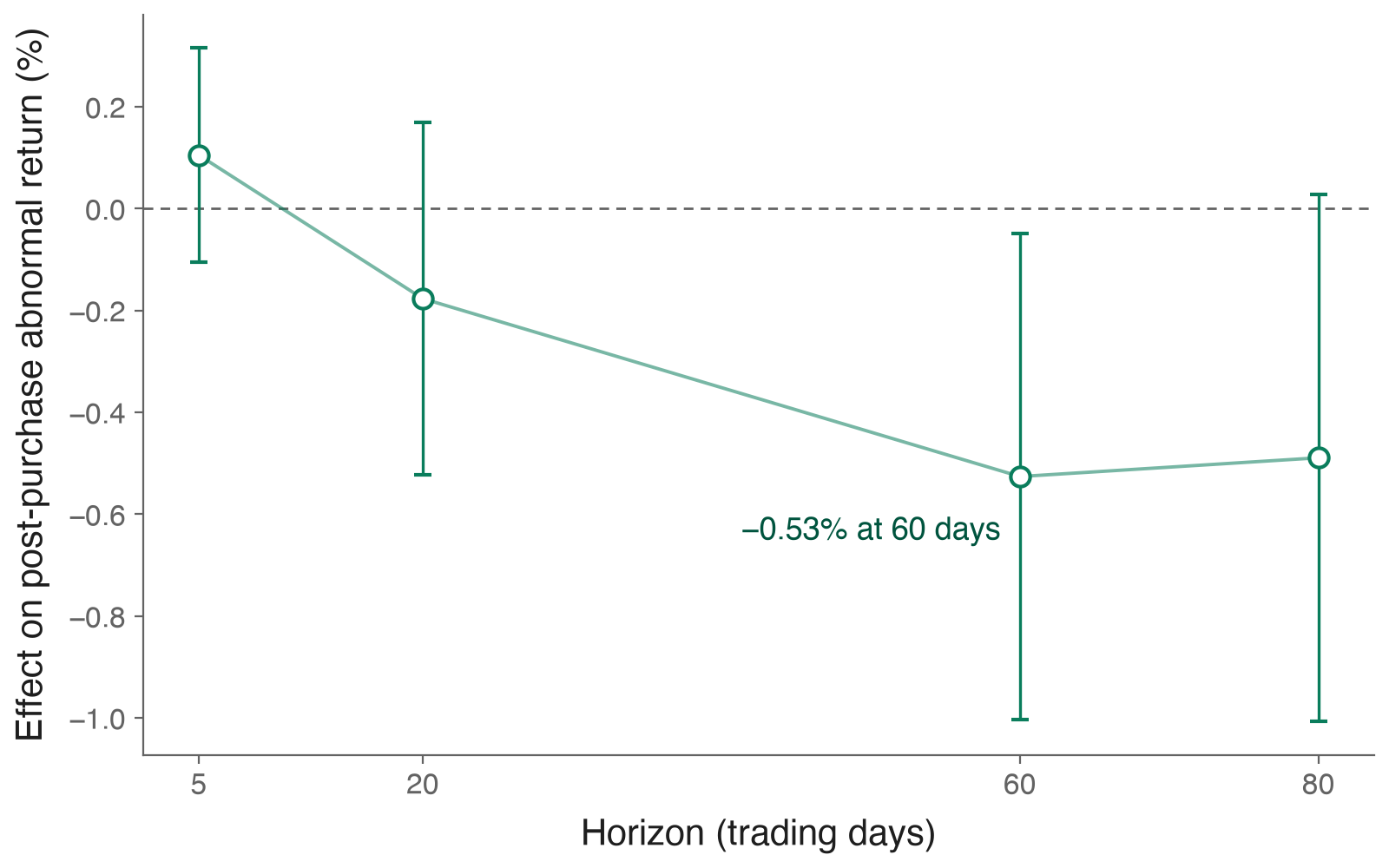
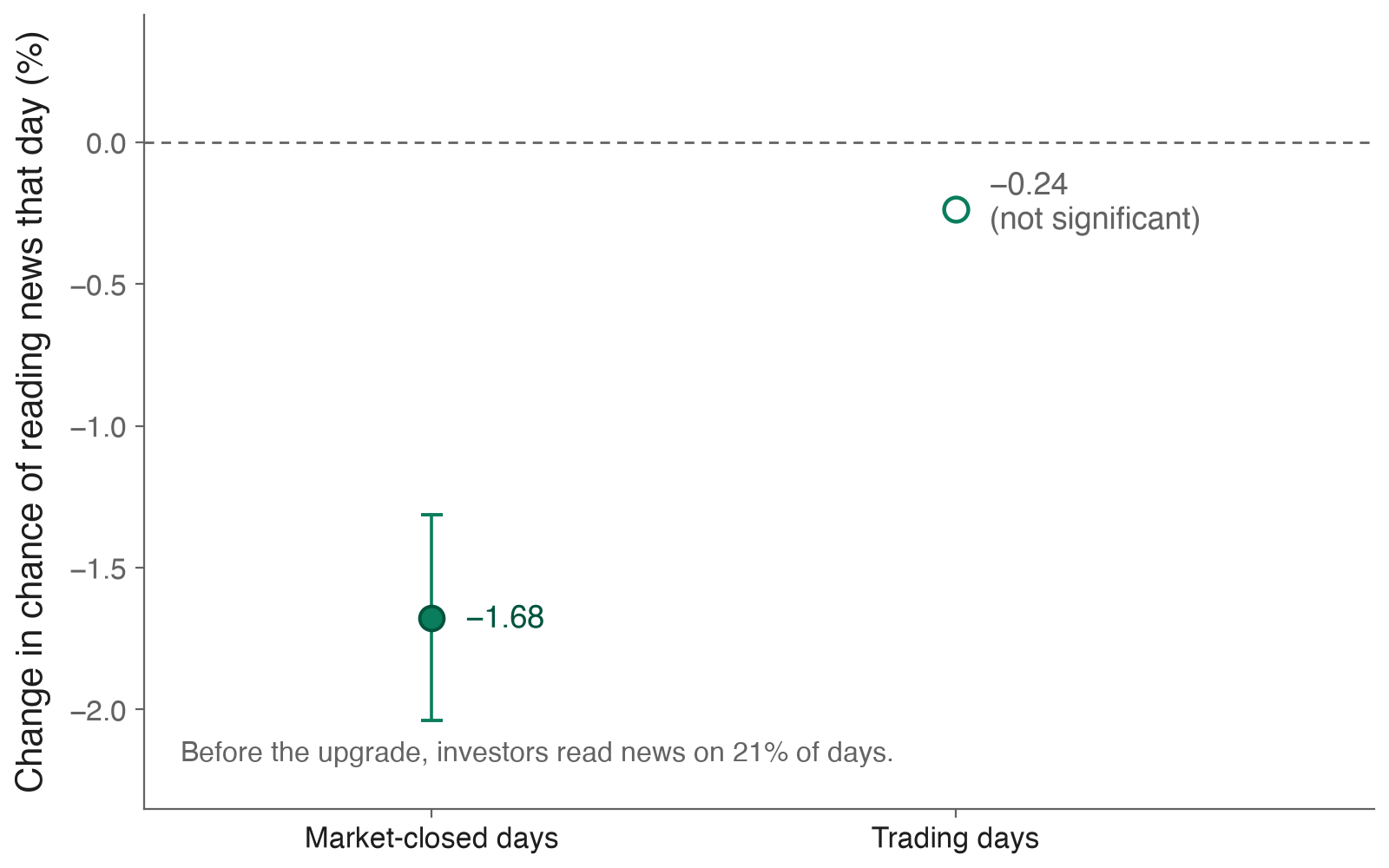
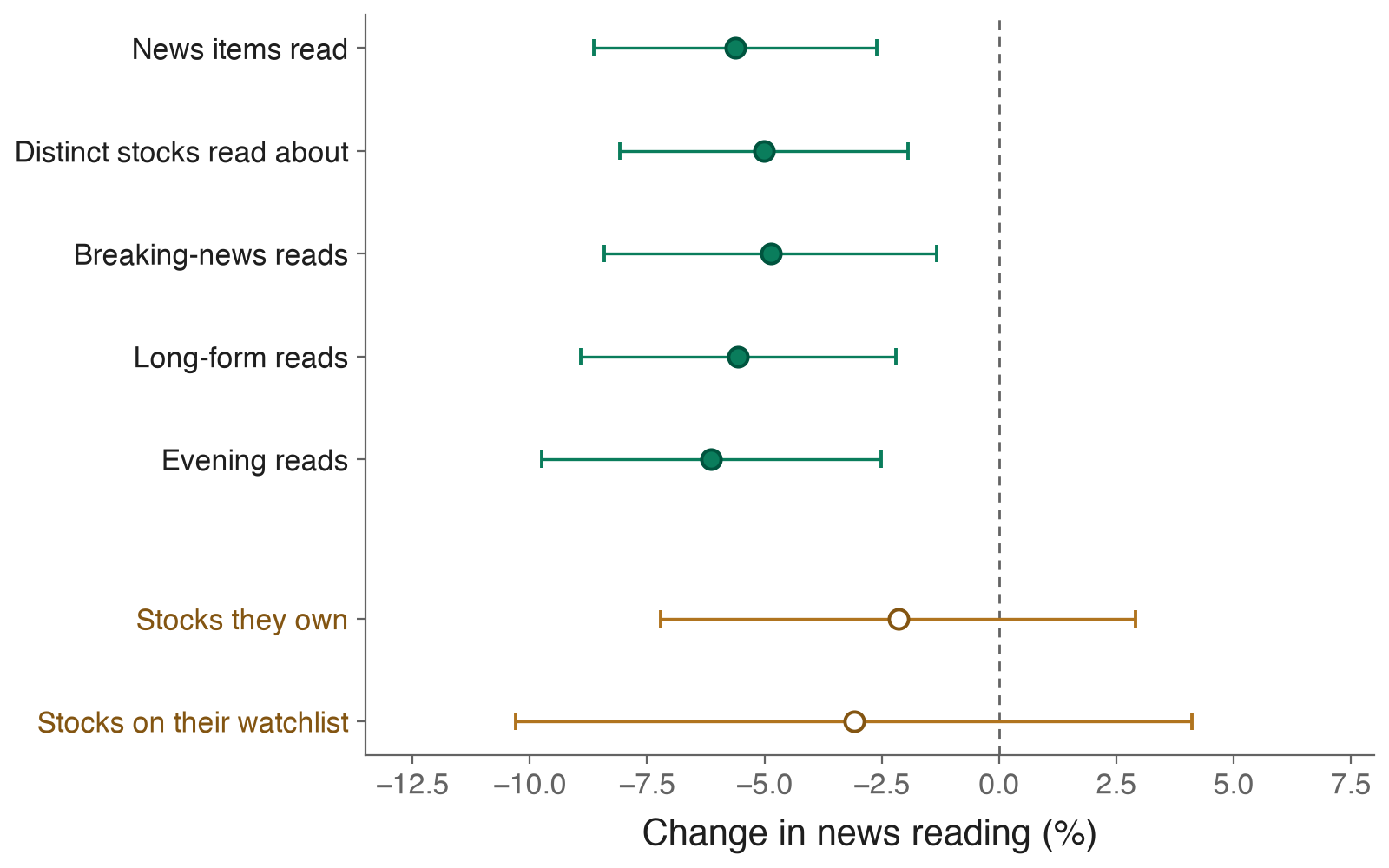
What role does stock following play in retail investing? A watchlist, a list of stocks to follow, permits deliberation, so warm purchases of stocks added to the watchlist on an earlier day should outperform the same investors’ cold purchases of stocks never watchlisted or added on the purchase day. Using a Chinese trading platform’s dated, priced watchlist additions and investors’ first purchases, I instead find warm purchases underperform cold purchases by 213 bps in Chinese four-factor-adjusted returns over 180 trading days, concentrated in stocks added on a limit-up close, a close at the daily upper price limit. Even holding documented buying tendencies, patterns in stock characteristics, fixed, late warm purchases, made after the first 5 trading days from the first day the stock could be bought, underperform cold purchases by 160 bps under that adjustment over 180 trading days. Yet deliberation, measured by news readings (opening stock-related articles), and reference dependence, measured by the watchlist-addition price and highest and lowest closing prices since watchlist addition, account for none of the gap. Beyond these alternatives, choice within investors’ watchlists favors stocks after another limit-up close matching the watchlist-addition event, consistent with similarity-based recall: present events evoke similar past experiences.
Information acquisition and trading

Does Information Reduce the Disposition Effect?
Attention, Mobile Push, and Selling at a Loss

with L. Huang and M. Massa

Disposition effect · Selective attention · Pushed news messages

Working paper (PDF)

Does information acquisition mitigate the disposition effect? Using holdings, sales, stock-page visits, and pushed news messages from a large Chinese online trading platform, we distinguish self-sought from unsolicited information. Investors acquire less information about losing positions. Following a stock-page visit, the difference in sale propensities between winning and losing positions is eight times as large as without a visit. Self-sought information nevertheless improves sale selection: retained winners subsequently outperform sold winners by a larger margin after a visit. Pushed news messages also strengthen the disposition effect but leave sale selection unchanged. Distinguishing the propensity to realize losses from the selection of positions for sale reconciles conflicting evidence on the relationship between information and trading decisions.

Push to Read and Trade
solo-authored

Information acquisition · Strategic complementarity · News articles

AFA Annual Meeting 2025, PhD Student Poster Session

Work in progress

Does prior readership increase the value of information acquisition, or indicate that trading opportunities have dissipated? A trading platform’s news articles display how many investors have already read them. Comparing early and late readers’ subsequent research and trading, I examine whether information acquisition exhibits strategic complementarity: others’ information acquisition increases the value of acquiring information oneself. The project links investor information demand to the incorporation of news into prices.

AI as an information technology

Trading on the Chatbot’s Clock
solo-authored

Conversational AI · Large language models

FMA Annual Meeting 2026, New Ideas Session

Working paper

How does conversational AI reshape investors’ information acquisition and trading? Following a trading platform’s replacement of its chatbot model with DeepSeek, a newer large language model, assistant questions rose sharply relative to questions to the older bot. Account-level records link assistant activity, consumption of news articles, and trades. I examine how investors’ engagement with conventional news and investment decisions evolve alongside their use of conversational AI.

Do Machines Help Analysts?
Evidence from AI-Augmented Equity Forecasts

with B. Charoenwong, X. Kang, and X. Zhao

Equity analysts · Machine forecasts · Forecast accuracy

Work in progress

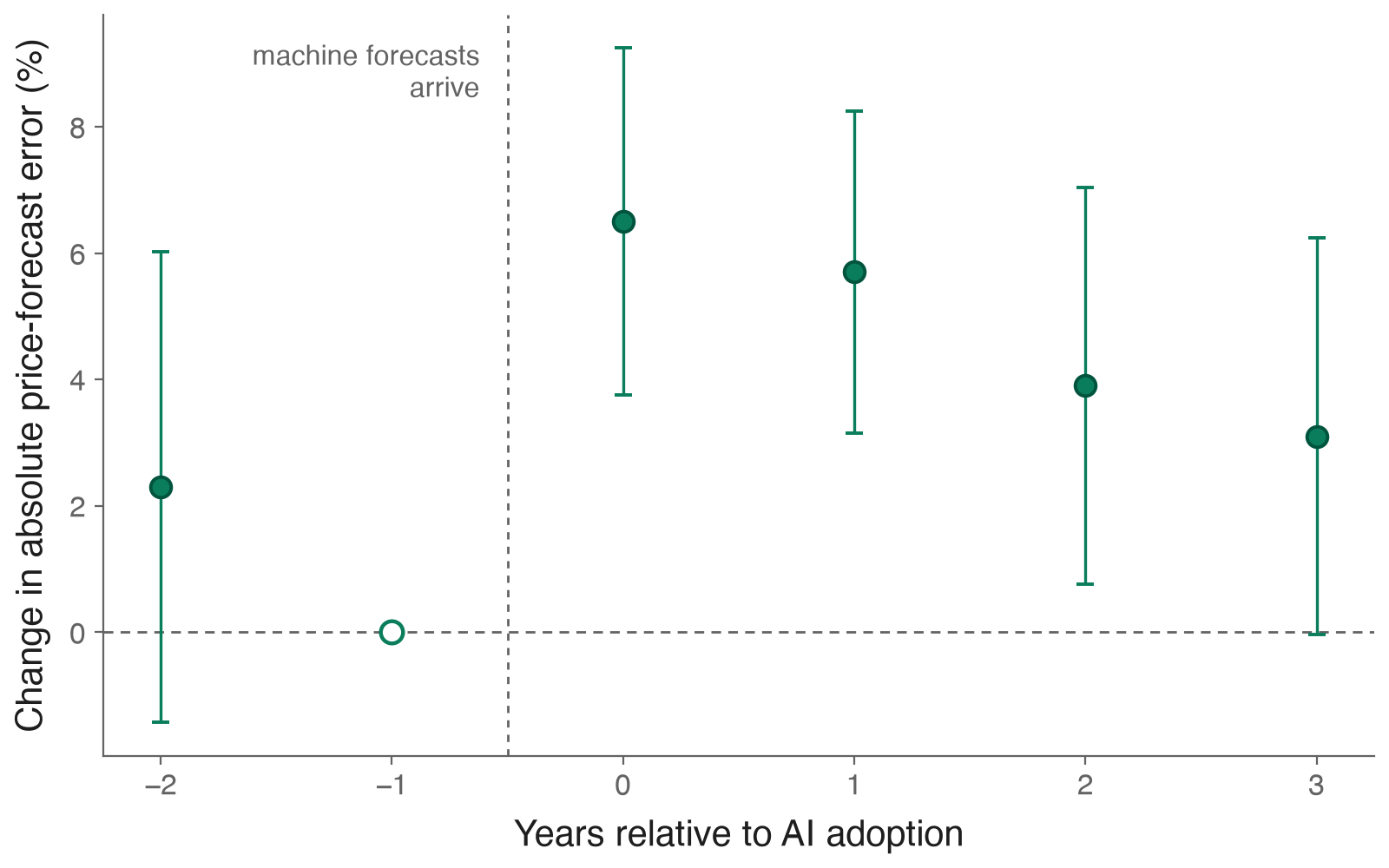
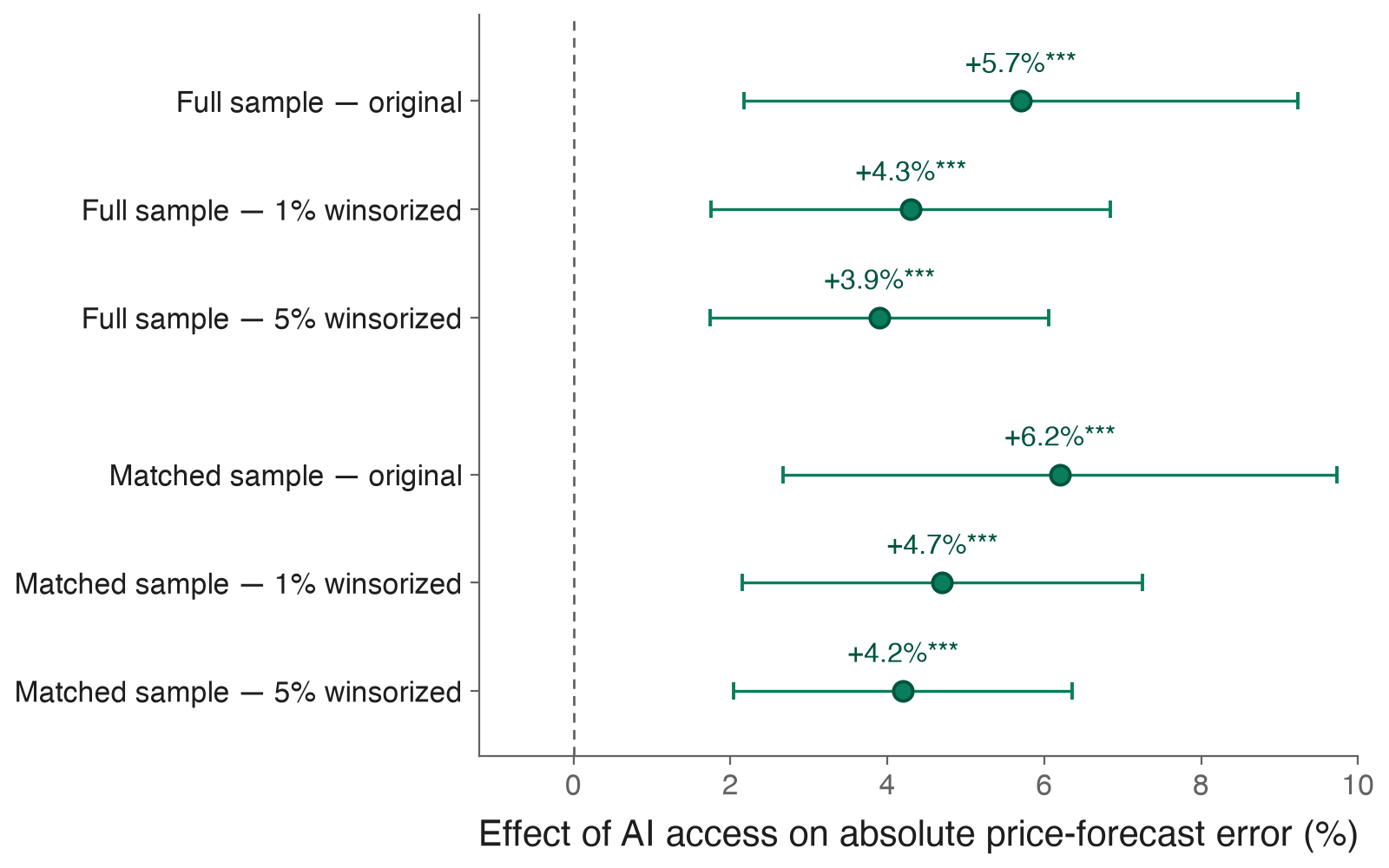
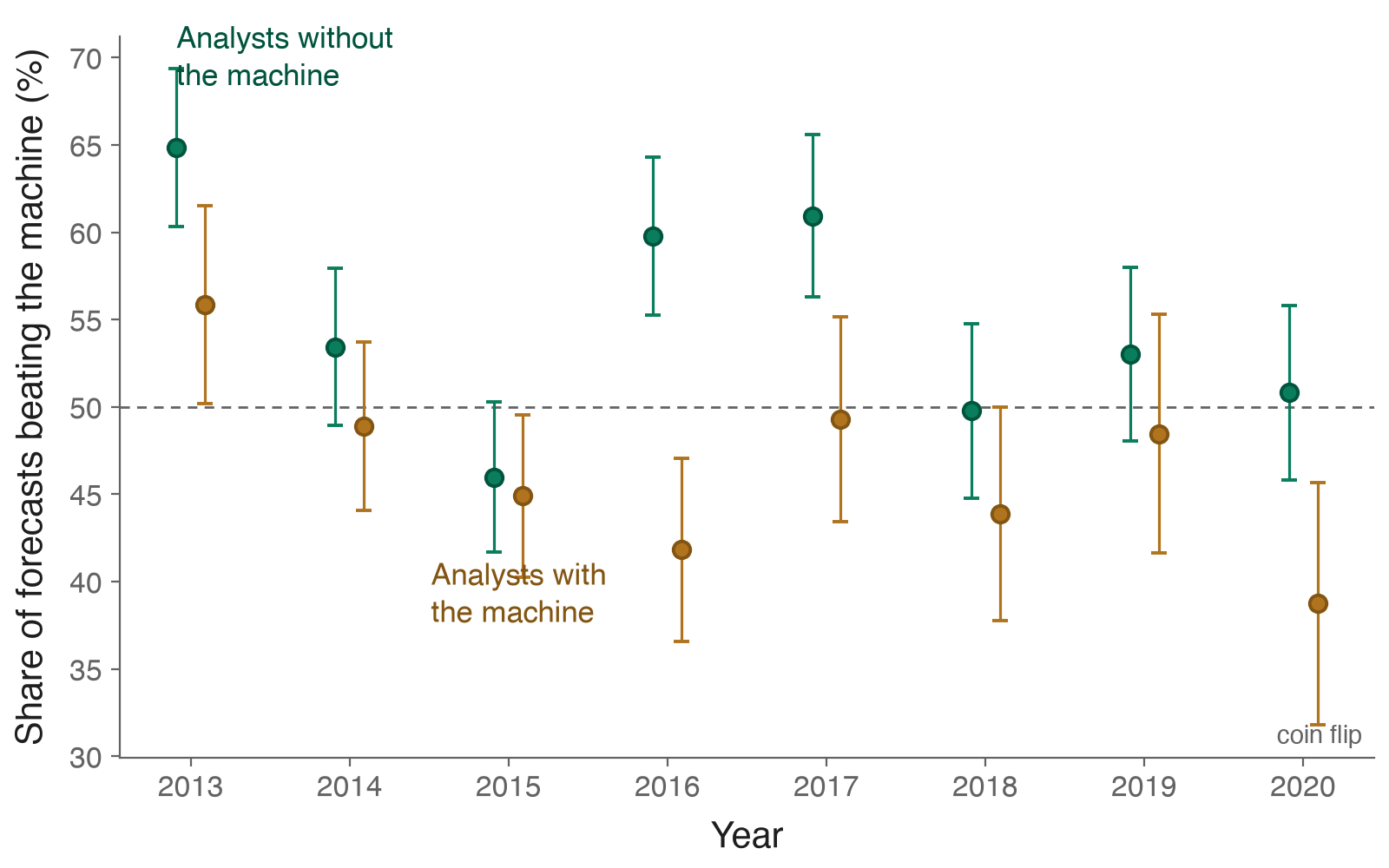
Does access to machine forecasts improve equity analysts’ forecast accuracy? We examine analysts’ forecasts alongside their access to machine forecasts of the same quantities. Analysts with access produce less accurate forecasts. The findings emphasize the integration of algorithmic output into professional judgment as a determinant of the value of AI assistance.

The Selection Behind the Penalty:
Strategic and Mandatory AI Disclosure in Music Streaming

with X. Kang, Y. Tan, W. Niu, and L. Huang

AI disclosure · Generative AI · Mandatory labeling · Selection

Best Junior Faculty Paper, AI in Business Conference 2026, Ohio State Fisher (presented by coauthor)

Working paper (PDF)

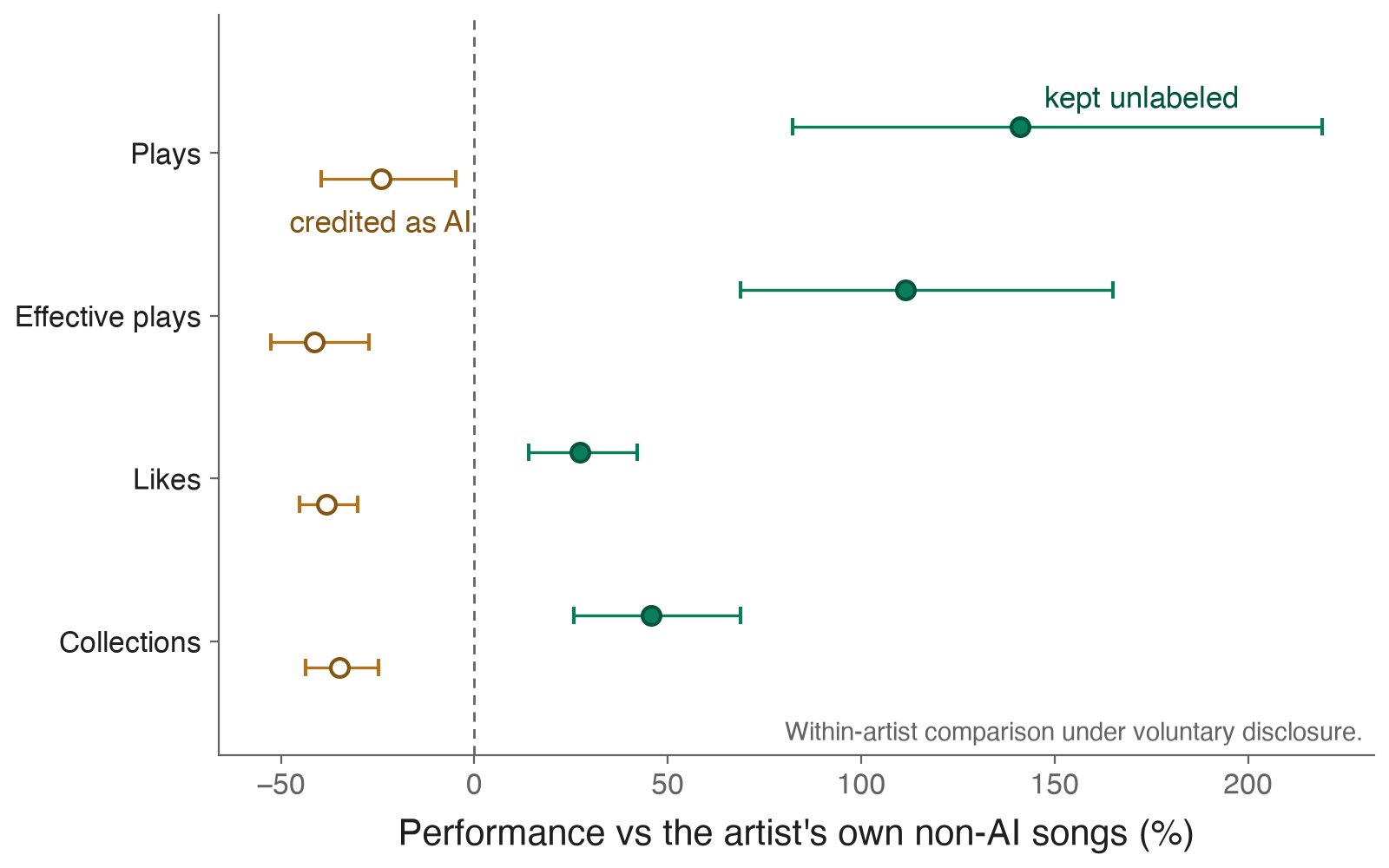
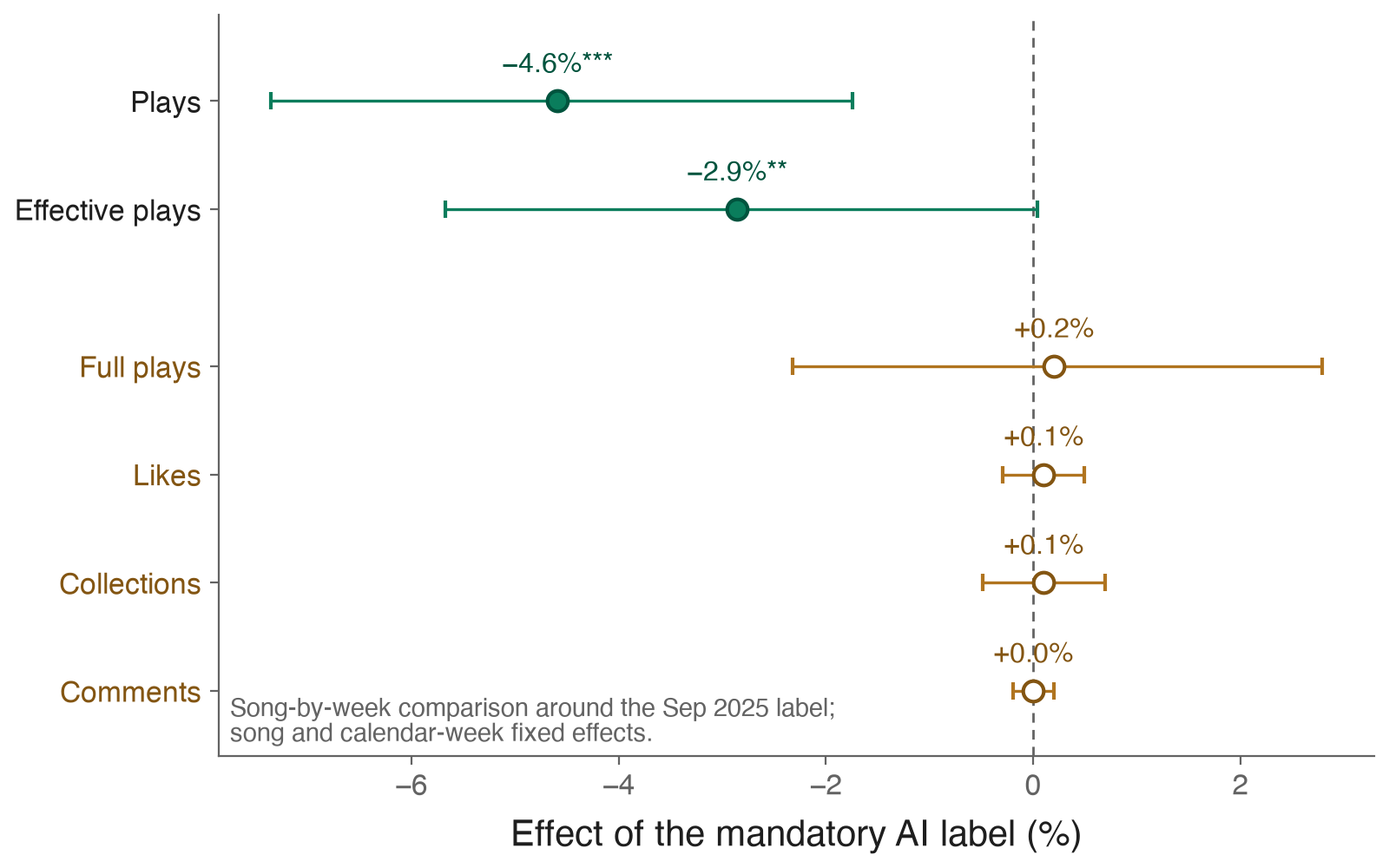
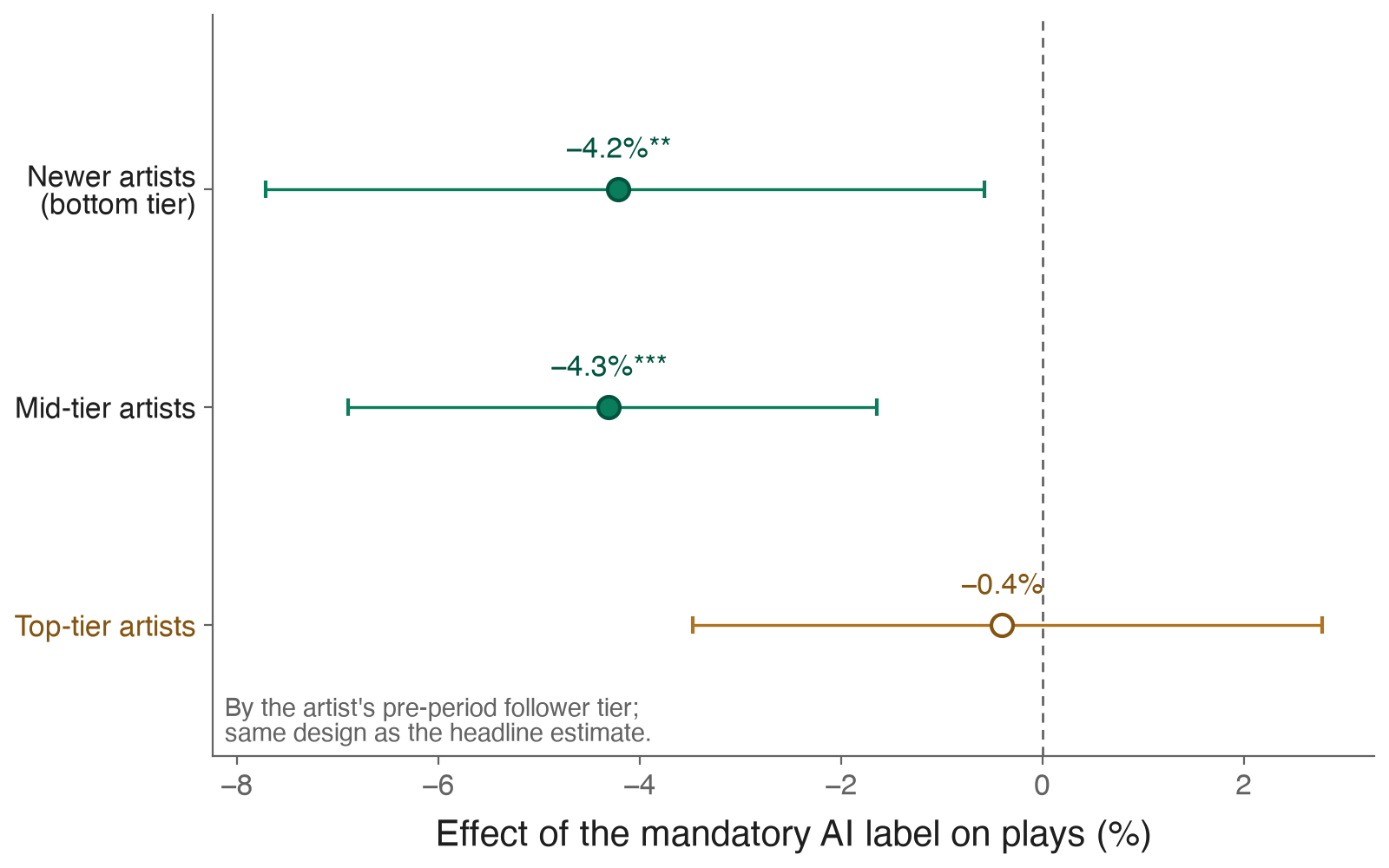
Voluntarily disclosed AI songs receive fewer plays than concealed AI songs, but disclosure reflects artists’ selection. Concealed songs attract roughly three times as many plays as the same artists’ credited songs. A music-streaming platform’s disclosure mandate separates selection from audience response. Mandatory disclosure reduces plays by about five percent, concentrated in discovery and among less established artists. The findings attribute much of the voluntary-disclosure gap to selection rather than the audience response to AI labels.

Other work

When Consumers Become Investors (Investomers):
Ownership Effects in Music Royalty Markets

with L. Huang, X. Kang, and Y. Tan

Platform-based ownership · Consumer attention · Digital platforms

Working paper

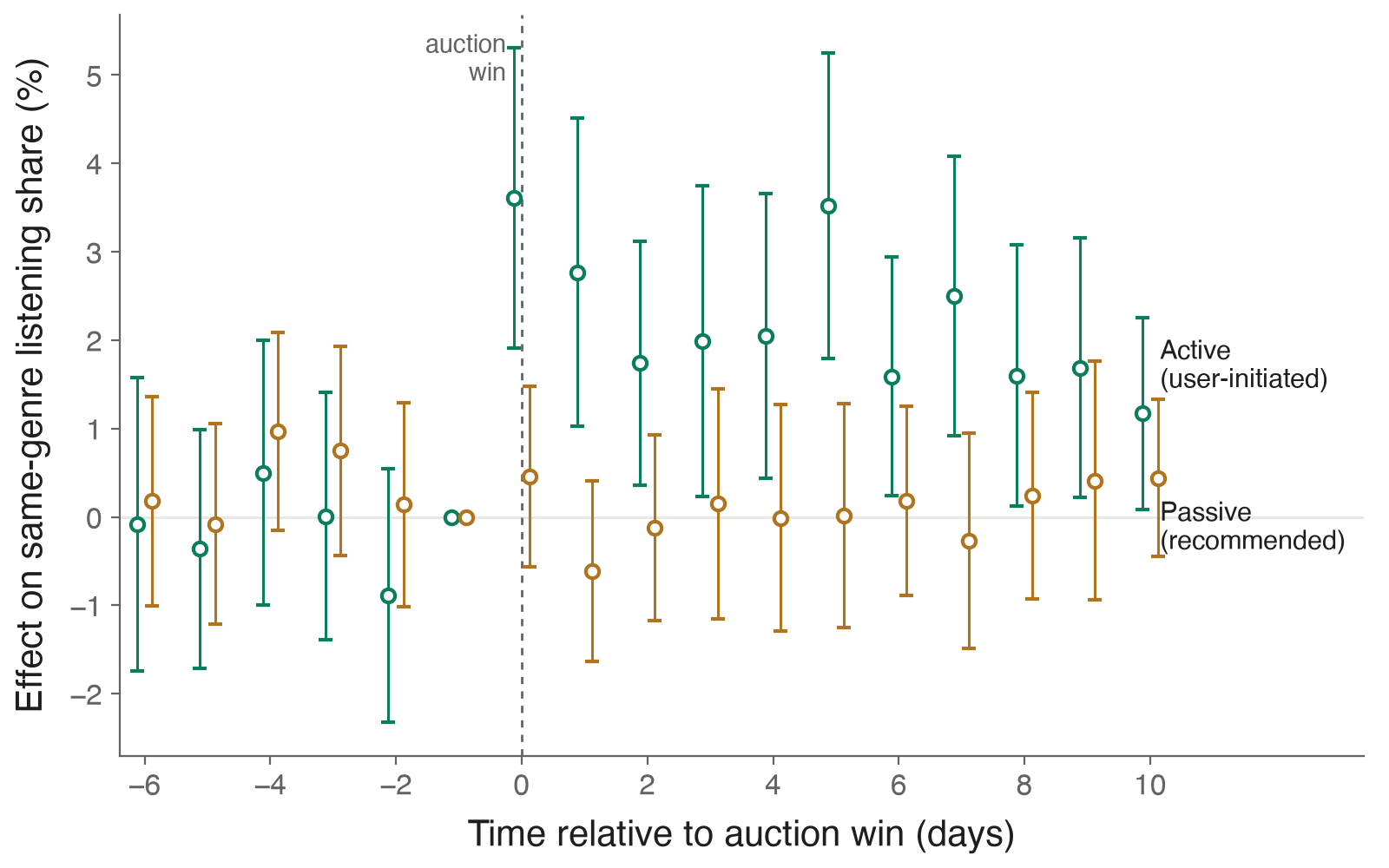
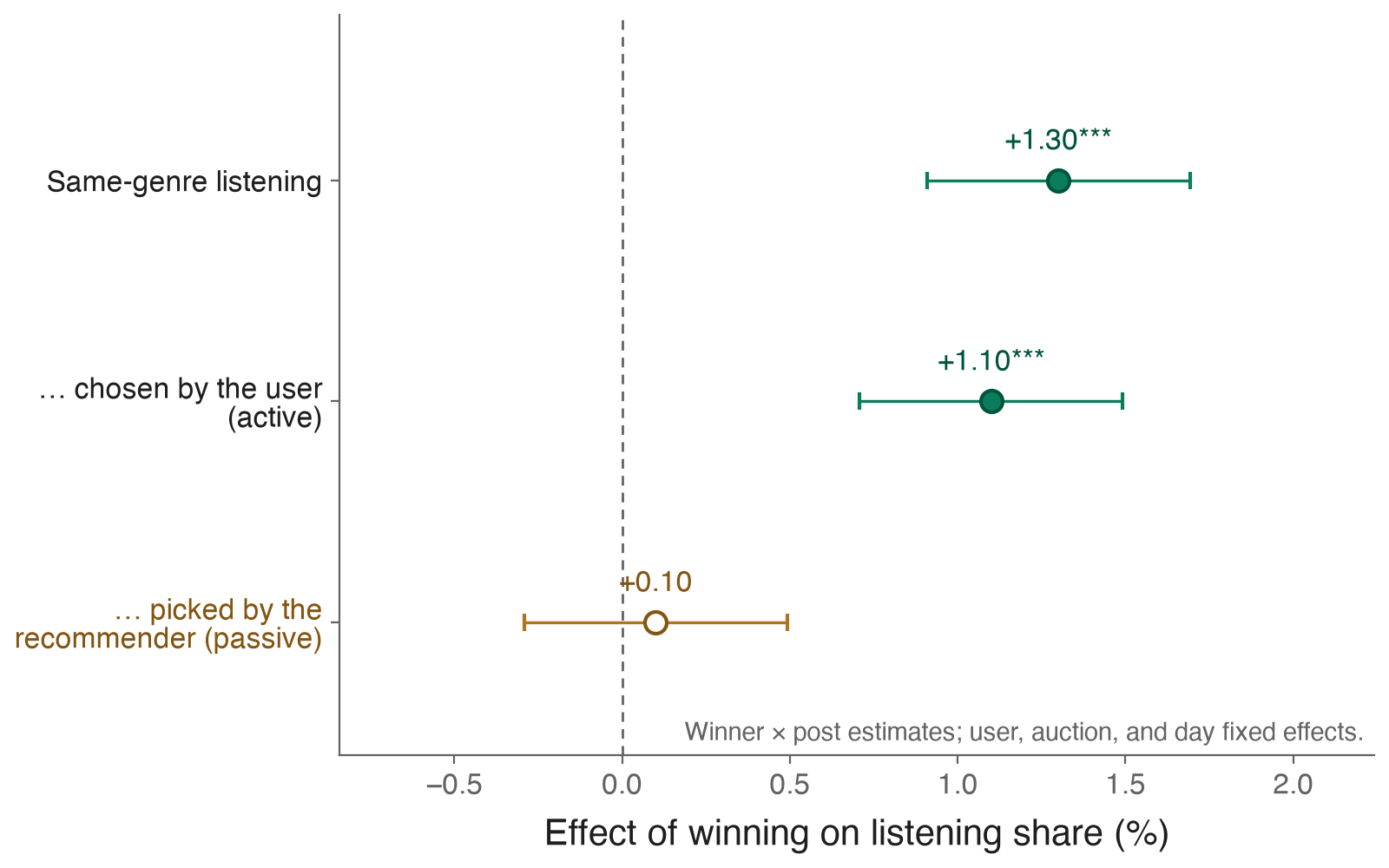
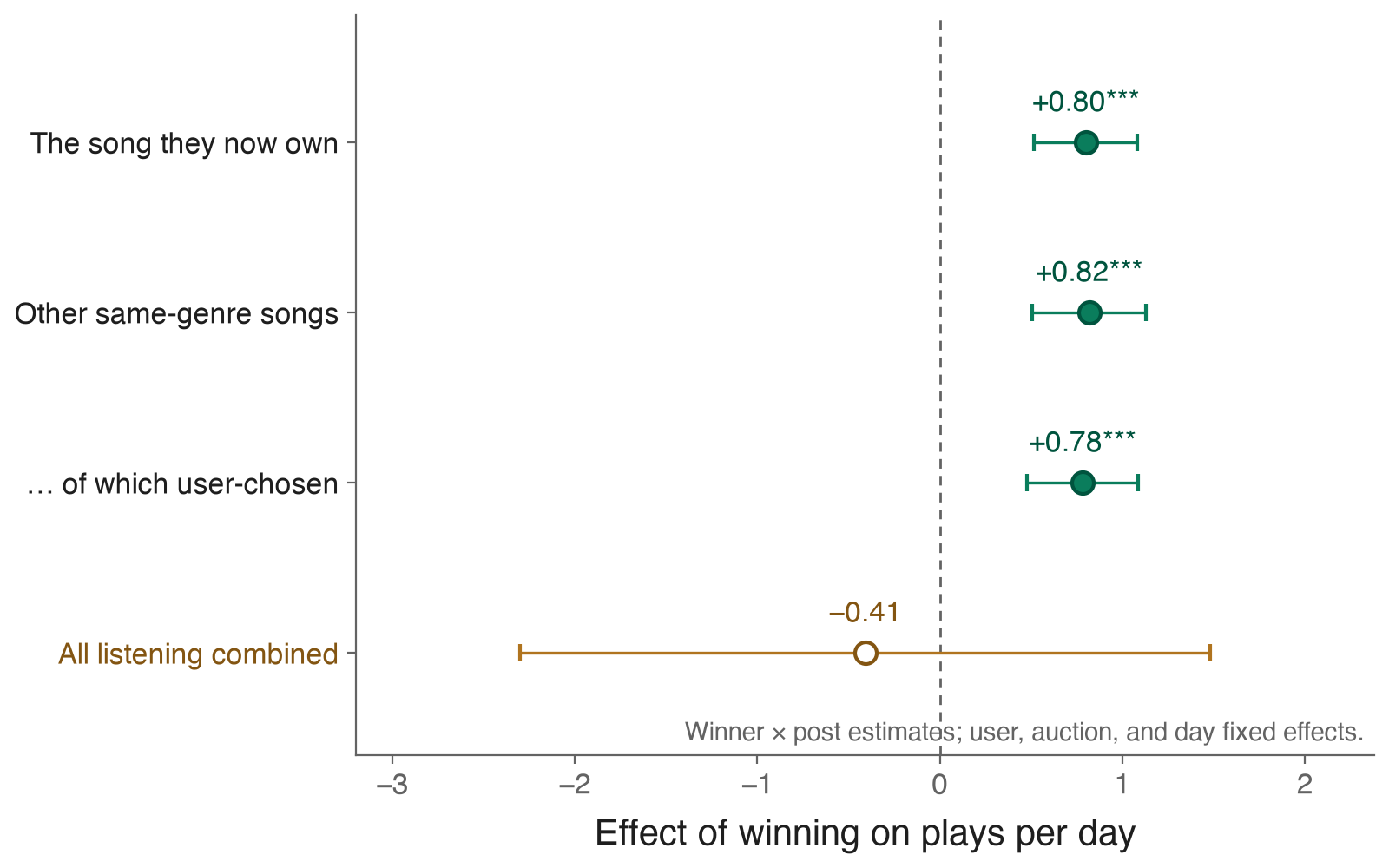
Does financial ownership affect consumption? We compare winners of fractional music-royalty auctions on a major Chinese streaming platform with the closest unsuccessful bidders. Acquiring royalty shares increases consumption of the owned song and other songs in the same genre. The increase is concentrated in user-initiated listening rather than recommendation-driven consumption, and realized royalty income explains little of it. The findings link financial ownership to consumer attention and demand.

Clientele Effect in Sovereign Bonds:
Evidence from Islamic Sukuk Bonds in Malaysia

with J. Cherian, Z. Li, Y. Shao, and M. G. Subrahmanyam

Clientele effect · Liquidity · Credit risk · Sovereign Sukuk

Critical Finance Review, 2022, 11(3–4), 677–745

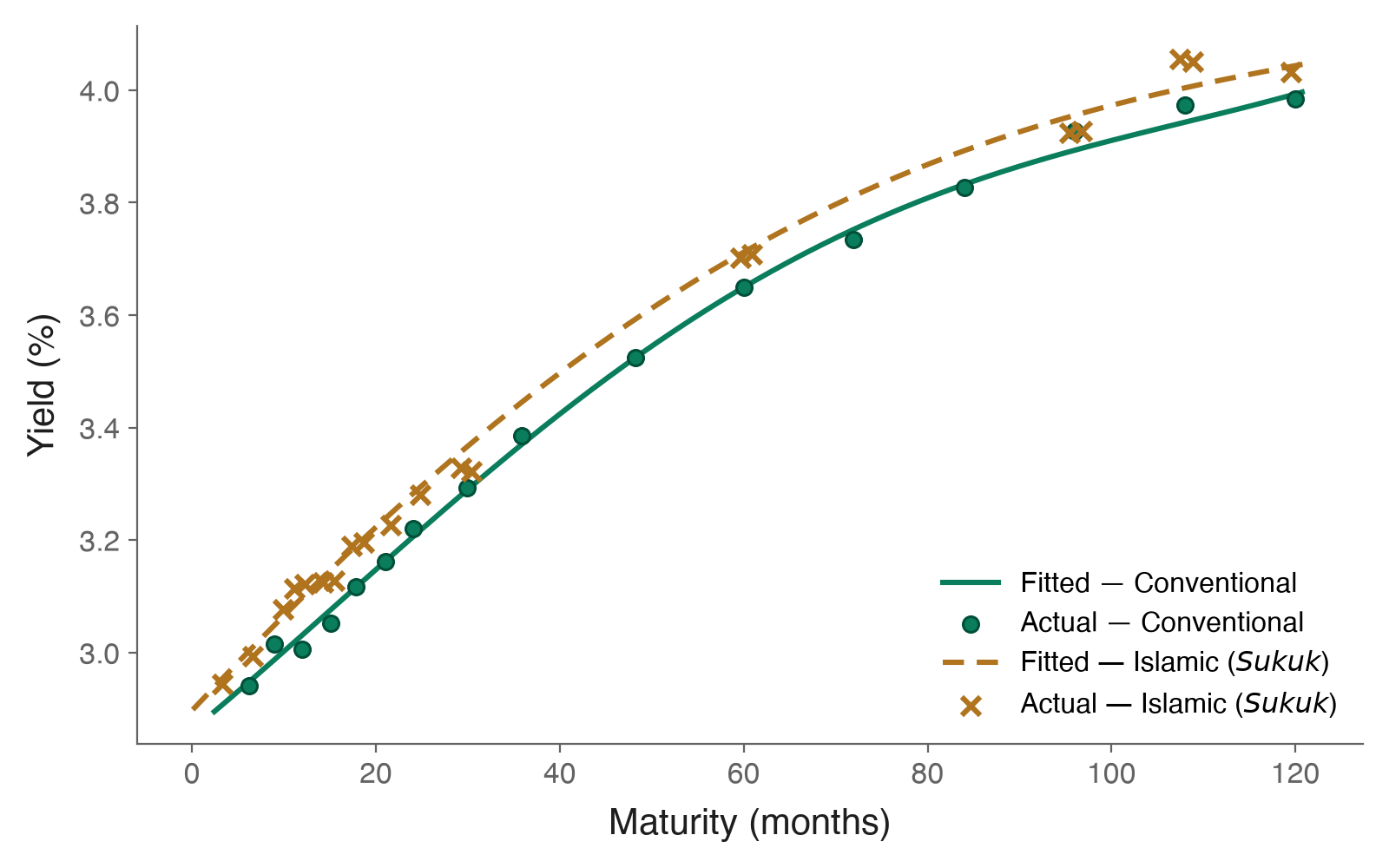
Malaysian Islamic sovereign bonds (Sukuk) attract both conventional investors and Islamic investors whose mandates restrict them to Islamic securities. Yet their yields exceed those of conventional sovereign bonds by 4.8 bps, other things equal. We attribute this spread to foreign institutional investors’ greater participation in the conventional market. Four pieces of transaction-level evidence support a clientele explanation for the yield differential.

Dollar Funding Pressure, Syndication Structure, and Inefficient Monitoring
solo-authored

Syndicated loans · Lead arrangers · Retention · Dollar funding

Work in progress

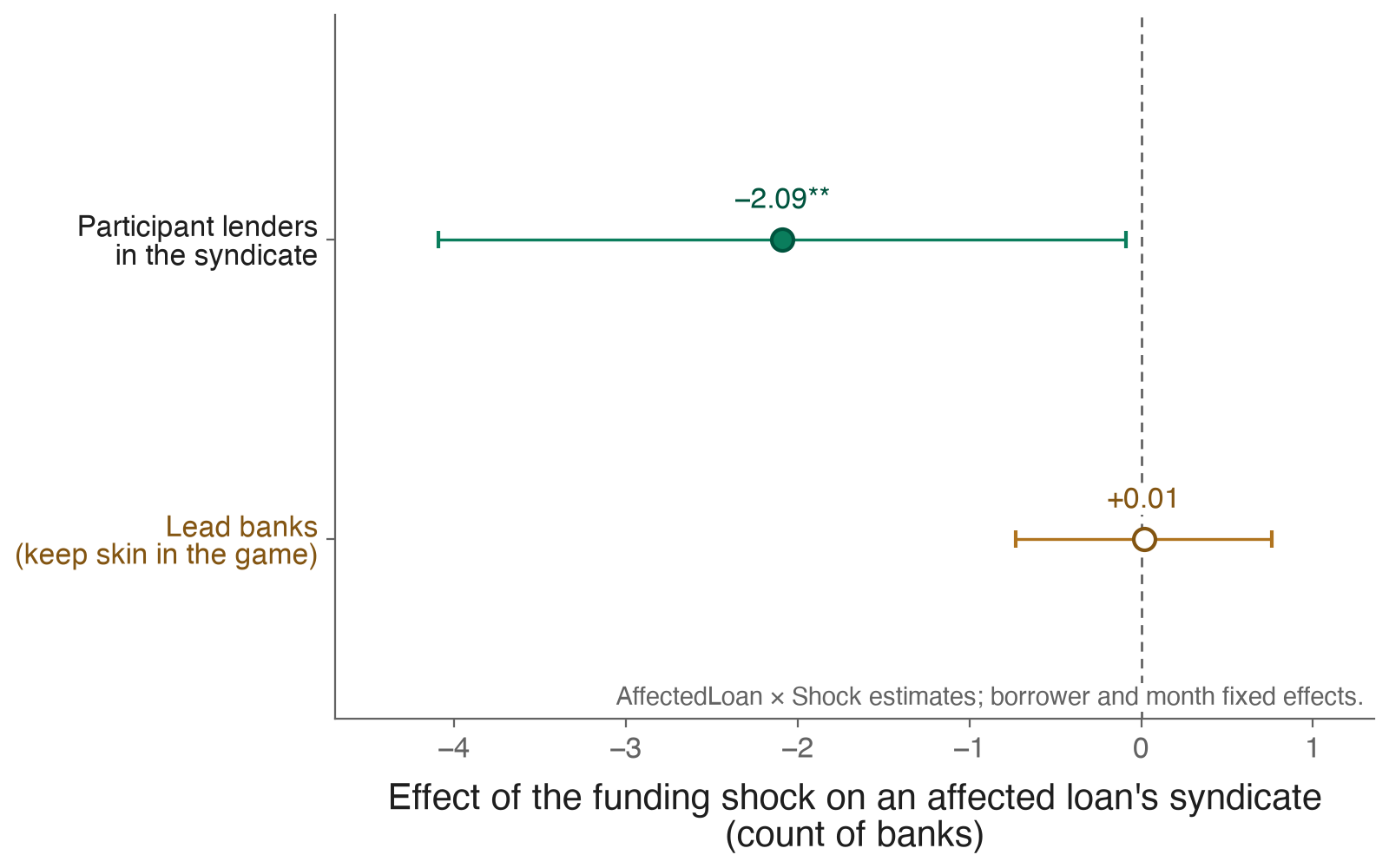
Lead arrangers’ retained loan shares provide incentives to monitor borrowers. I examine whether funding constraints also determine retention. During the Euro crisis, Eurozone banks most exposed to U.S. money market funding reduced their retained shares, pointing to funding pressure rather than information asymmetry.

Teaching

Outstanding MBA Tutor Award
INSEAD
Tutor, Financial Markets and Valuation (MBA core; instructor: Naveen Gondhi)
Student evaluation: 4.67 / 5.00
INSEAD
Tutor, Corporate Financial Policy (MBA core; instructor: John Kuong)
Student evaluation: 4.46 / 5.00
INSEAD

Curriculum Vitae